In an emotional outburst that rattled the league, Sean McVay didn’t just question a call—he questioned the system. Following the Rams’ gut-wrenching loss to Seattle, McVay demanded an immediate investigation into referee Clay Martin, claiming biased decisions suffocated a last-second comeback before it even had a chance to breathe.
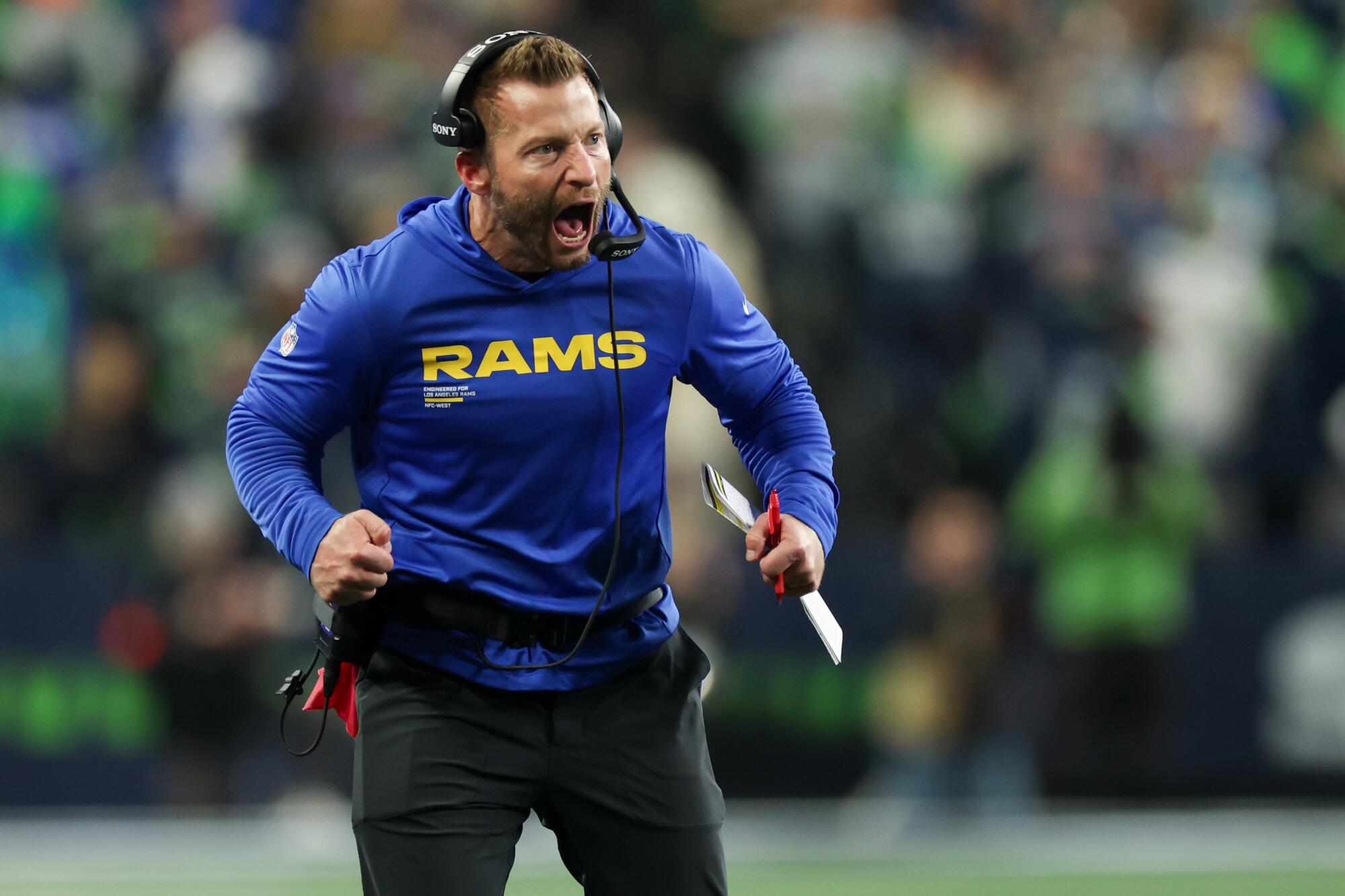
With 25 seconds remaining, McVayinsists Brandin Cooks clearly secured the ball and dropped to a knee. By the book, the clock should’ve stopped. It didn’t. Confusion erupted. Matthew Stafford sprinted the offense to the line, firing toward Puka Nacua near midfield. Officials ruled Nacua down in a way that kept the clock running. No replay. No challenge. No explanation. The final seconds evaporated. Game over.
To McVay, this wasn’t a judgment call—it was a breakdown. At best, negligence. At worst, an injustice that decided a season in silence. “You can’t end games like that,” one Rams source said. “Not without review. Not in January. Not with everything on the line.”
Then came the shockwave. Tom Brady—typically measured, rarely political—reportedly backed McVay’s call for accountability. His warning was stark: when outcomes are decided without transparency, credibility fractures. The reaction was instant. Fans erupted. Analysts split. Some cried conspiracy. Others called it confirmation of a growing problem.

What followed wasn’t closure, but division. Refs defended discretion. The league urged calm. Yet the questions lingered. Why no review? Why no pause? Why does trust feel optional in the biggest moments?
This wasn’t just about one play.
It was about process.
It was about faith in the whistle.
And right now, that trust is bleeding out of the NFL.