When the margin for error disappeared, Sean McVay didn’t retreat into discipline or clarity.
He leaned into ego.
With the season balanced on a single defensive stand, the Rams didn’t lose because of talent. They didn’t lose because of effort. They didn’t lose because Seattle got lucky. They lost because their head coach believed his idea mattered more than the reality unfolding in front of him.

The warning signs were everywhere.
Seattle had already diagnosed the pressure looks. They had identified the leverage issues. They knew where the blitz would leave air behind it—and they were waiting. Every prior drive had been a quiet rehearsal. Quick-game concepts. Option routes snapping open the moment pressure showed. Checkdowns turning into chain-movers. McVay saw the same film everyone else did.
And still, he sent it.
In the final minutes, when containment, spacing, and clock discipline should have been sacred, McVay chose aggression for aggression’s sake. He dialed up pressure into a quarterback who had been feasting on pre-snap tells. He exposed the middle of the field when protecting it should have been non-negotiable. He trusted a coverage shell that had been bleeding all night, hoping this time—somehow—it would hold.
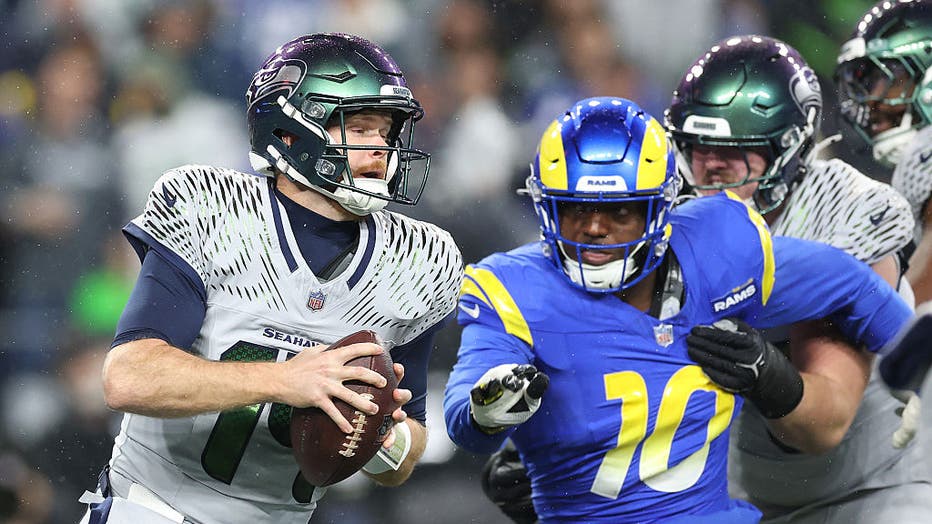
It didn’t.
Seattle didn’t panic. They didn’t improvise. They didn’t force throws. They executed exactly what McVay gave them. Hot reads arrived untouched. Receivers released cleanly into vacated zones. The clock kept moving. The defense kept chasing. What should have been resistance turned into inevitability.
This wasn’t a blown assignment.
This wasn’t a missed tackle.
This wasn’t a player freezing under pressure.
This was schematic stubbornness.
While the Seahawks adjusted, McVay froze. He ignored momentum. Ignored personnel mismatches. Ignored the fatigue showing on his own defense. Each call doubled down on the last mistake, compounding damage instead of correcting it. One blitz widened seams. One widened seam extended a drive. One extended drive drained belief.
By the time the Rams realized what was happening, it was already over.
Great coaches understand January football. They strip complexity. They force opponents to earn every inch. They protect the middle of the field and dare quarterbacks to be flawless. McVay didn’t do that. He chased the signature moment—the highlight stop, the cinematic finish—and instead handed Seattle something far more valuable: certainty.
Certainty that the pressure was coming.
Certainty that the windows would be there.
Certainty that patience would win.
And it did.
This loss doesn’t belong in the category of “unlucky.”
It wasn’t controversial.
It wasn’t stolen by officials or decided by inches.
It was preventable. Painfully so.
Reputations in this league are built on adaptability. On the ability to feel the game slipping and change its direction. On knowing when to abandon pride for survival. In that moment, with everything on the line, McVay didn’t adjust.
He blinked.
And the Seahawks—calm, prepared, and ruthless—closed the door.