For three hours, Mile High Stadium believed.
Not hoped — believed.
The kind of belief that settles into your bones and convinces you the ending is already written. The crowd came dressed for celebration, voices hoarse before kickoff, breath visible in the cold Colorado air. This was supposed to be the night Denver reclaimed its place among the NFL’s elite. A home AFC Championship. A wounded but resilient roster. A city desperate to feel relevant again.
Everything pointed one direction.
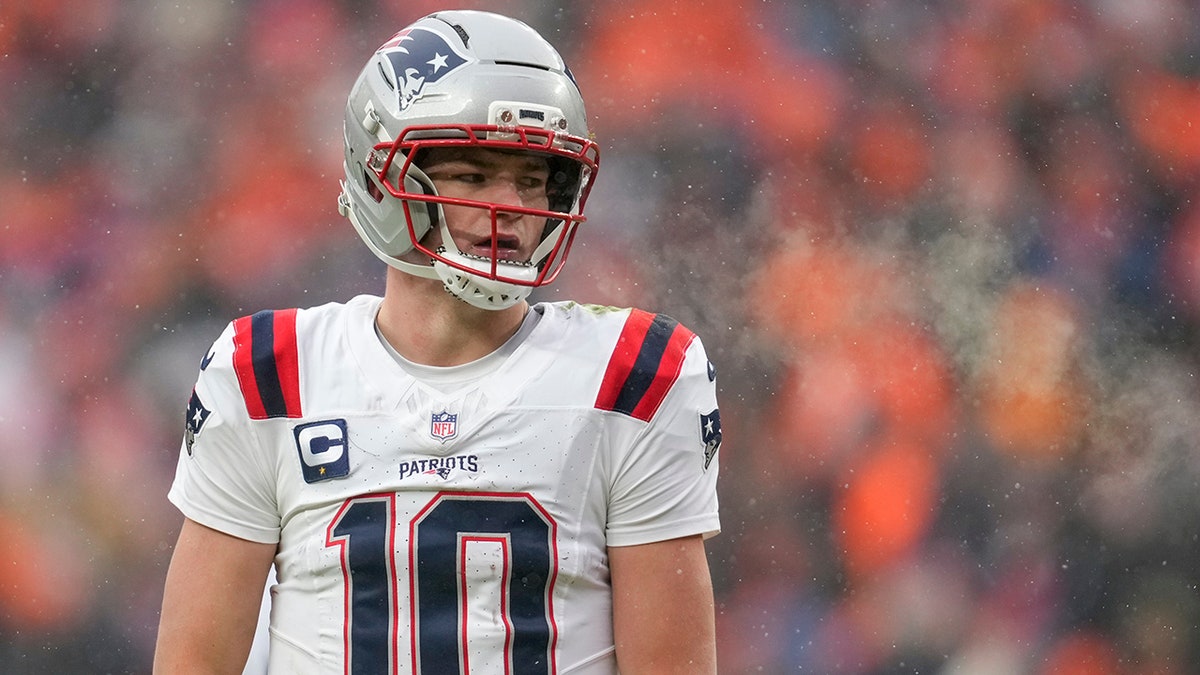
Until it didn’t.
From the opening drive, the game felt heavier than football. Every snap carried consequence. Every collision echoed like it might define a season. Denver played as if history itself was standing behind them, pushing them forward. The defense flew downhill. The offense moved with urgency, even under pressure. And with each successful series, the stadium grew louder, more convinced.
This was Mile High at its most unforgiving.
And yet, on the opposite sideline, stood a rookie quarterback who refused to blink.
Drake Maye arrived at this moment carrying more doubt than hype. Draft analysts questioned his readiness. Critics said the moment would be too big. Too loud. Too fast. Too cruel for a rookie thrust into championship football.
They said he’d fold.
They said he’d hesitate.
They said he’d crack.
Instead, he waited.
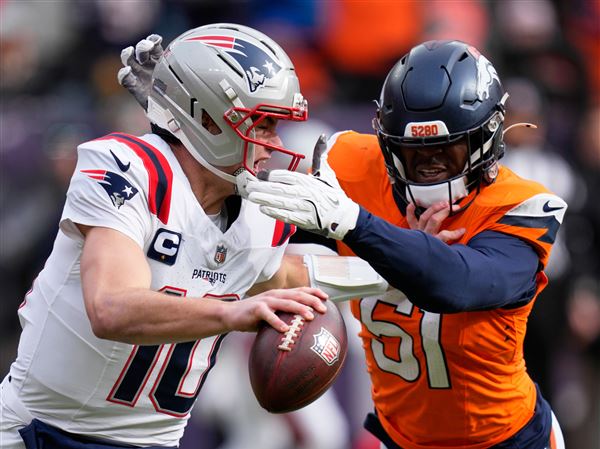
Through three quarters of punishment, Maye absorbed the chaos. Denver threw everything at him — disguised coverages, delayed blitzes, pressure from every angle. Hits piled up. Reads tightened. Windows shrank. But Maye didn’t chase the moment.
He studied it.
While the crowd roared, he listened to the silence between plays. While Denver fed off emotion, he leaned into discipline. Every series became a lesson. Every incompletion became data.
And slowly, quietly, the game shifted toward him.
The Patriots didn’t dominate the stat sheet. They didn’t overwhelm Denver physically. They survived. They stayed within striking distance. And in championship football, survival is all you need until the moment arrives.
That moment came late.
Very late.
With the Broncos clinging to a narrow lead and the clock beginning to suffocate New England’s options, the Patriots got the ball back. The stadium exploded, sensing the end. Fans stood, arms raised, voices united in one demand:
One stop.
That was all Denver needed.
One defensive stand to protect a season, a city, and a dream built over months of resilience.
The Patriots broke the huddle.
Drake Maye stepped under center.
And everything changed.
The first play was simple. Efficient. A completion that silenced doubt but not the crowd. The second play moved the chains. The third forced Denver to hesitate, just enough to reveal coverage.
Each snap drained seconds.
Each throw drained belief.
Mile High was still loud — but the tone shifted. What had been confidence turned into anxiety. What had been noise turned into pleading.
Maye saw it.
He felt it.
And instead of retreating, he attacked.
He began carving Denver’s defense apart with precision and nerve that didn’t belong to a rookie. He manipulated safeties with his eyes. He trusted timing over fear. He stepped into throws as pressure closed around him, delivering the ball just before the pocket collapsed.
This wasn’t improvisation.
This was command.
Denver’s defense, heroic all night, began to crack — not from weakness, but from exhaustion. The altitude that once empowered them now betrayed them. Coverage held for a second too long. A gap opened for a heartbeat. And Maye exploited every inch.
A third-down conversion sucked the air out of the stadium.
A sideline strike erased minutes of belief.
Then came the play.
The one that will live forever in New England lore — and haunt Denver.
Facing pressure, Maye stood tall. The rush closed in. A defender broke free. The crowd screamed. And Maye released the ball with absolute trust, threading it through traffic into a window so small it barely existed.
Completion.
First down.
Mile High went from deafening to silent in seconds.
You could feel it — the moment belief fractured.
The Patriots smelled blood.
They didn’t rush. They didn’t force. They let Maye finish what he started. Each snap was deliberate. Each decision was clean. Denver’s sideline grew restless. Coaches gestured. Players shouted assignments. But the rhythm was gone.
Time bled away.
And when the Patriots crossed into scoring range, the truth became unavoidable.
Denver wasn’t losing to history.
They were losing to a quarterback who refused to respect it.
When the go-ahead score finally came, it landed like a punch to the chest. No theatrics. No chaos. Just inevitability. The Patriots bench erupted. Maye jogged to the sideline, helmet on, expression unchanged.
Job unfinished.
Denver had one last chance.
But belief, once broken, is nearly impossible to rebuild in seconds. The offense returned to the field under unbearable pressure. The crowd tried to revive itself, but the sound lacked conviction. Players moved fast, but urgency had replaced clarity.
The final plays unraveled quickly.
When the clock expired, the silence was complete.
Not anger.
Not disbelief.
Just emptiness.
The fallout was instant and vicious.
Broncos fans pointed to officiating. Flags not thrown. Moments that felt tilted. They searched for something external — something to explain how a night that felt destined slipped away.
Patriots fans pointed to execution.
To discipline.
To a rookie quarterback who delivered when the moment demanded it.
Both sides were loud.
But on the field, the truth was brutal and unavoidable.
New England wanted the moment more.
While Denver leaned on history, atmosphere, and belief built on legacy, the Patriots leaned on their quarterback. They placed the season on the shoulders of a rookie — and he carried it without hesitation.
For Drake Maye, this wasn’t just a win.
It was a declaration.
Every doubt erased.
Every narrative flipped.
The questions about readiness vanished in the cold Denver air. The label of “project” died with that final drive. In its place stood a quarterback who had just outdueled a city, a defense, and a championship atmosphere.
One game away from a Lombardi Trophy.
For Denver, the loss cut deeper because it felt earned — and then stolen by execution they couldn’t match when it mattered most. They didn’t collapse. They didn’t embarrass themselves. They simply ran out of answers when the moment demanded perfection.
Championships aren’t decided by who wants it more for three quarters.
They’re decided by who wants it most in the final minutes.
Denver built belief on legacy.
On banners.
On the weight of Mile High.
New England built belief in real time — snap by snap, throw by throw, with a rookie quarterback who refused to be overwhelmed.
And in the end, belief decided everything.
This wasn’t just a loss.
It was a passing of authority.
A reminder that the NFL doesn’t care about what was supposed to happen — only about who delivers when everything is on the line.
Denver will remember the silence.
New England will remember the moment.
And Drake Maye will remember the night he announced himself to the league.